

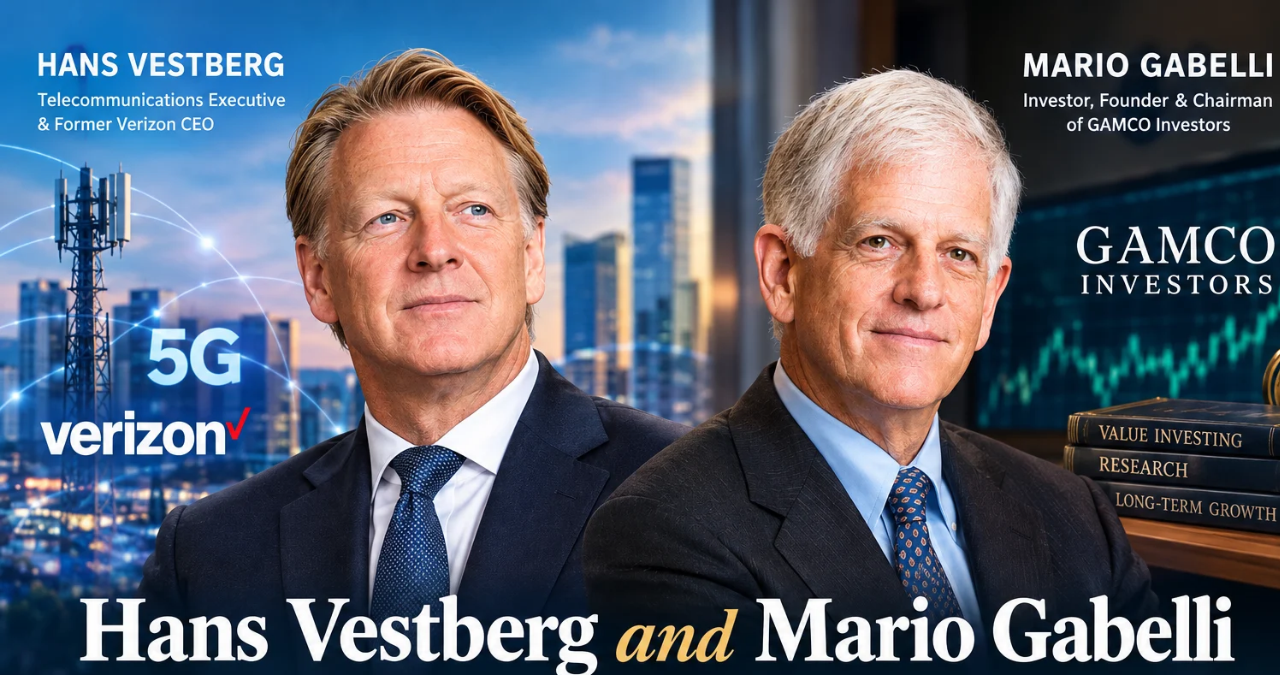
hans vestberg and mario gabelli are two well-known names in the world of business, but they built their reputations in very different ways. Hans Vestberg became a prominent technology and telecommunications executive through senior leadership roles at Ericsson and Verizon. Mario Gabelli, meanwhile, built his career around investing, company research, value investing, and asset management through GAMCO Investors.
At first glance, the two may not seem closely connected. One is best known for leading a major communications company and shaping large-scale network strategy, while the other is recognized for analyzing businesses and finding investment opportunities. Yet, there is an interesting common thread: both careers demonstrate the importance of long-term thinking, detailed research, strategic decisions, and the ability to adapt to changing markets.
Their stories also offer useful lessons for students, investors, business professionals, and anyone interested in how major organizations are built and managed. Looking at their careers side by side gives readers a broader understanding of leadership, technology, investing, and corporate decision-making.
Who Are Hans Vestberg and Mario Gabelli?
Hans Vestberg is a Swedish business executive whose career has been closely connected with telecommunications and technology. He spent more than two decades at Ericsson, where he held several leadership positions before becoming president and chief executive officer. He later joined Verizon and became its chief executive officer in 2018 and chairman in 2019.
Verizon’s current biography identifies Vestberg as a former chairman and CEO and says he served as CEO from 2018 to 2025. He is now described as a special advisor to Verizon and also serves as a senior advisor at Evercore.
Mario Gabelli followed another path. He is the founder, chairman, and a senior investment leader at GAMCO Investors, an investment management company he founded in the late 1970s. His investment philosophy is strongly associated with fundamental research, value investing, and his Private Market Value with a Catalyst approach.
So, while their industries are different, both men have spent decades making important decisions where patience, analysis, and strategic thinking matter.
Hans Vestberg’s Early Career and Rise in Telecommunications
Hans Vestberg was born in Hudiksvall, Sweden, and studied business administration at Uppsala University. His professional journey began at Ericsson, where he developed extensive experience in the telecommunications industry.
Vestberg joined Ericsson in the early 1990s and eventually worked in leadership positions across several international markets. His experience included operations in countries such as Sweden, China, Brazil, Mexico, and the United States. This international exposure helped him understand that technology businesses often operate across very different cultures and markets.
His career at Ericsson included a major financial leadership role. He became chief financial officer in 2007 and later moved into the company’s top leadership position. Ericsson’s transformation during this period involved a stronger focus on software and services rather than relying mainly on traditional hardware.
This experience became an important part of Vestberg’s leadership identity. Technology companies can’t simply stand still. New networks, devices, software, customer expectations, and business models arrive quickly. A successful leader has to understand both today’s market and what customers may need tomorrow.
Hans Vestberg and His Verizon Leadership
Vestberg joined Verizon in 2017 as chief technology officer and president of Global Networks. His technical background made the position especially significant because Verizon was investing heavily in next-generation network infrastructure.
He became Verizon’s CEO in 2018 and chairman in 2019. During his leadership, the company placed major emphasis on expanding and developing its 5G network strategy. Verizon describes Vestberg as an architect of its 5G strategy and highlights the company’s expansion of 5G for mobility, home internet, business services, and private networks.
One of the most important parts of this strategy was the company’s investment in wireless spectrum. A Stanford Directors’ College biography notes that Vestberg led major investments intended to strengthen Verizon’s long-term network position, including the company’s large C-Band spectrum purchase.
The bigger lesson is easy to spot: infrastructure businesses often require enormous investments before customers see the full benefit. Building a modern communications network isn’t like launching a simple consumer product. It requires equipment, spectrum, software, engineering, maintenance, security, and continuous upgrades.
Vestberg’s career therefore provides a useful example of technology leadership where today’s spending can be designed to support tomorrow’s opportunities.
Mario Gabelli’s Journey Into Investing
Mario Gabelli’s story is built around a different kind of analysis. Instead of managing a telecommunications giant, he developed a reputation for studying businesses and determining what they may be worth.
Gabelli graduated summa cum laude from Fordham University and later earned an MBA from Columbia Business School. He also became a Chartered Financial Analyst. These academic and professional credentials complemented his research-driven approach to investing.
Gabelli’s investment organization began with an institutional research business and developed into GAMCO Investors. The firm was founded in 1977 and became known for applying fundamental research to investment decisions.
Rather than simply following popular market trends, Gabelli became associated with examining the underlying economics of businesses. That means asking questions such as:
- What is a company really worth?
- What assets does it control?
- What could influence its future earnings?
- Is there a possible event that could change the market’s view?
- Is the stock price significantly different from the underlying business value?
This style requires patience. Markets can be emotional in the short term, while businesses may take years to demonstrate their full potential.
Understanding Mario Gabelli’s Value Investing Philosophy
Value investing is often described in simple terms as buying something for less than what it is believed to be worth. In practice, however, it can involve extensive research.
Gabelli is particularly associated with his Private Market Value with a Catalyst methodology. GAMCO describes this approach as a core part of its investment discipline and says it has become an analytical standard within the value-investing community.
Private Market Value asks investors to think about what a company might be worth if it were evaluated from the perspective of a knowledgeable buyer. The catalyst element then considers what might cause the market to recognize that value.
A catalyst might include:
- A merger or acquisition
- A change in company management
- An industry restructuring
- Asset sales
- Regulatory changes
- Improved business performance
- A change in capital allocation
The approach demonstrates an important investment lesson: finding an undervalued company is only part of the job. Investors also need to think about what could unlock that value.
Gabelli’s career shows why research and patience can work hand in hand. It also highlights the importance of understanding a company’s industry rather than judging an investment only by its stock price.
How Hans Vestberg and Mario Gabelli Differ
Although hans vestberg and mario gabelli have both reached prominent positions, their professional responsibilities have been very different.
| Area | Hans Vestberg | Mario Gabelli |
|---|---|---|
| Primary field | Telecommunications and technology | Investment management |
| Best known for | Verizon and Ericsson leadership | GAMCO Investors and value investing |
| Professional strength | Technology and corporate strategy | Fundamental company research |
| Major focus | Networks, connectivity, innovation | Business value and investment opportunities |
| Leadership style | Operational and technology-focused | Research and investment-focused |
| International experience | Extensive global telecommunications experience | Global investment research |
| Education | BBA from Uppsala University | Fordham University and Columbia Business School |
| Major business theme | Long-term infrastructure investment | Long-term value creation |
| Current professional work | Strategic advisory and board leadership | Investment and corporate leadership |
This comparison shows that there isn’t a simple story in which one person is “better” than the other. They operate in different environments and solve different problems.
Vestberg has had to think about millions of customers, employees, network infrastructure, technology standards, capital expenditure, and competition. Gabelli has had to evaluate companies, industries, management teams, financial conditions, and market valuations.
Both roles require judgment, but the tools and daily decisions are different.
The Shared Importance of Long-Term Thinking
One of the strongest connections between hans vestberg and mario gabelli is their emphasis on thinking beyond the immediate moment.
Telecommunications infrastructure is inherently long term. A network investment may require substantial capital before its benefits are fully visible. Companies must anticipate future demand for data, connectivity, cloud services, artificial intelligence applications, and enterprise technology.
Investing can also require patience. A stock may remain undervalued for a long period before a catalyst changes investor expectations.
That creates a valuable business lesson: short-term noise doesn’t always determine long-term results.
Whether someone is managing a technology company or studying an investment, it can be tempting to react to every headline. Strong decision-makers, however, often step back and ask what really matters.
For business leaders, that might mean asking:
- Is the investment strengthening the company’s future?
- Does the strategy solve a real customer problem?
- Can the organization execute the plan?
- What risks could change the outcome?
For investors, similar questions might focus on valuation, competitive advantages, financial strength, and possible catalysts.
Technology, Communications, and Investment Thinking
There is another interesting connection between these careers: communications and technology have long been important areas of investment research.
Gabelli’s career includes a history of studying media, telecommunications, and other industries. His investment organization says its research team covers industries globally to identify attractive opportunities.
Vestberg, on the other hand, has spent much of his professional life directly managing the technology and communications infrastructure behind those industries.
This creates two different perspectives on the same economic ecosystem.
A technology executive may ask, “How can we build the network that customers will need?”
An investor may ask, “How much economic value can this network create for the company and its shareholders?”
Those questions are different, but they are connected.
Technology decisions eventually influence business performance. Business performance influences investment decisions. Investment decisions, in turn, affect how companies can finance future growth.
Leadership Lessons From Hans Vestberg
Vestberg’s career offers several useful lessons for aspiring executives.
Adaptability Matters
His movement from Ericsson to Verizon shows the importance of adapting skills to new organizations and environments. A leader doesn’t have to remain in one company forever to build expertise.
Technology Needs Business Strategy
Technical knowledge alone isn’t enough at the highest level. Major technology projects involve customers, finances, employees, regulation, competition, and long-term planning.
Global Experience Has Value
Vestberg’s career included work across several international markets. That type of experience can help executives understand different customer needs and business cultures.
Infrastructure Requires Patience
Large networks cannot be built overnight. Long-term infrastructure planning requires commitment and a willingness to make investments before every benefit becomes obvious.
Communication Is Part of Leadership
A modern executive has to explain complex subjects in language that employees, investors, customers, governments, and the public can understand.
These lessons apply well beyond telecommunications.
Leadership Lessons From Mario Gabelli
Gabelli’s career also provides several valuable ideas for people interested in business and finance.
Research Comes First
A strong investment decision shouldn’t depend entirely on a headline or market rumor. Fundamental research can provide a deeper understanding of a company’s prospects.
Think About Intrinsic Value
Market prices change constantly. Gabelli’s approach encourages investors to consider what a business may actually be worth rather than focusing only on its current quoted price.
Look for Catalysts
An undervalued company may remain undervalued unless something changes. Identifying potential catalysts can therefore be an important part of investment analysis.
Understand the Industry
Companies don’t operate in isolation. Industry structure, regulation, technology, competitors, customers, and suppliers can all influence business value.
Stay Patient
Good research can take time to produce results. That doesn’t mean every investment will succeed, but it does demonstrate why patience is an important part of long-term investing.
Education and Mentorship as Part of Their Legacies
Education is another area where these careers offer useful lessons.
Vestberg’s formal business education at Uppsala University provided a foundation for a career that later became heavily focused on technology and telecommunications. His professional experience then added practical knowledge that couldn’t be learned entirely in a classroom.
Gabelli has been especially active in supporting education. Fordham University notes that Gabelli and his wife, Regina Pitaro, made a transformative gift to the university in 2010. The university’s undergraduate and graduate business schools were subsequently unified under the Gabelli name.
This highlights an important point: professional success can extend beyond personal achievements. Experienced business leaders can also contribute by supporting education, research, mentorship, and institutions that prepare the next generation.
Their Broader Influence on Business
The influence of hans vestberg and mario gabelli extends beyond their individual companies.
Vestberg has participated in international discussions about technology, connectivity, digital inclusion, and business leadership. His career has included involvement with organizations and initiatives focused on technology and broader social development.
Gabelli’s influence has largely come through investment research, asset management, corporate leadership, and education. His work has helped make detailed fundamental analysis a central part of the identity of the investment organization he founded.
Their influence illustrates two important ways business leaders can shape industries.
One way is through direct operational decisions, such as building networks and developing technology.
The other is through capital allocation, research, and identifying businesses that may have long-term value.
Both are essential parts of a modern economy.
What Investors and Entrepreneurs Can Learn From Them
People don’t have to become CEOs or professional investors to learn from these careers.
Entrepreneurs can take inspiration from Vestberg’s ability to operate in a rapidly changing technology environment. The lesson is straightforward: businesses need to evolve as customers and technology evolve.
Investors can learn from Gabelli’s focus on research and value. Instead of buying an asset simply because it is popular, investors can develop a habit of asking why it may be valuable.
Students can learn something equally important from both men: expertise takes time.
Neither career was built overnight. Their professional paths developed through education, experience, leadership positions, research, international exposure, and years of decision-making.
In today’s world of instant information, that’s a refreshing reminder. There are no shortcuts to genuine expertise.
Are Hans Vestberg and Mario Gabelli Business Partners?
There is no strong public evidence that Hans Vestberg and Mario Gabelli are business partners or that they built a major company together.
Their professional histories are primarily separate. Vestberg’s career centers on telecommunications, technology, corporate leadership, and strategic advisory work. Gabelli’s career centers on investment management, value investing, corporate governance, and financial research.
That distinction is important because names can sometimes appear together in online searches without indicating a formal partnership.
A useful way to understand them is as two influential executives whose careers can be studied together for comparison. Their paths demonstrate different approaches to creating and evaluating business value.
In other words, their connection is more educational and comparative than a documented joint business venture.
The Continuing Relevance of Their Ideas
The careers of hans vestberg and mario gabelli remain relevant because the challenges they address haven’t disappeared.
Technology companies still need to invest in infrastructure while managing costs and competition. Investors still need to determine whether market prices accurately reflect business value.
Artificial intelligence, cloud computing, advanced networks, digital services, and changing consumer habits are creating new opportunities. At the same time, investors face familiar questions about valuation, risk, competition, and sustainable growth.
This is where their professional lessons remain useful.
Vestberg’s career demonstrates the importance of investing in future technology while understanding customers and operational realities. Gabelli’s investment philosophy demonstrates the importance of studying what businesses are worth and identifying potential events that could reveal that value.
The tools may change, but the underlying principles of disciplined decision-making remain remarkably durable.
Key Takeaways From Hans Vestberg and Mario Gabelli
For readers looking for the most important lessons, the careers of hans vestberg and mario gabelli can be summarized through several ideas:
- Build expertise over time. Both careers were developed over decades.
- Keep learning. Technology and financial markets change constantly.
- Think long term. Major decisions often need years to produce their full results.
- Study the fundamentals. Strong decisions require more than surface-level information.
- Understand risk. Every major investment or business decision involves uncertainty.
- Adapt to change. Markets and technology rarely remain still.
- Look beyond headlines. Context often matters more than short-term noise.
- Communicate clearly. Complex ideas become more useful when people can understand them.
- Create lasting value. Successful leadership is about more than short-term attention.
- Share knowledge. Education and mentorship can extend a professional legacy.
Frequently Asked Questions About Hans Vestberg and Mario Gabelli
Who is Hans Vestberg?
Hans Vestberg is a Swedish business executive best known for his leadership roles at Ericsson and Verizon. He served as Verizon’s CEO from 2018 to 2025 and chairman from 2019 to 2025. Verizon now identifies him as a special advisor, while Evercore describes him as a senior advisor.
Who is Mario Gabelli?
Mario Gabelli is an American investor and business executive who founded GAMCO Investors. He is closely associated with value investing and the firm’s Private Market Value with a Catalyst approach. He earned an MBA from Columbia Business School and graduated summa cum laude from Fordham University.
What is Hans Vestberg best known for?
Vestberg is particularly known for his telecommunications leadership and his role in developing Verizon’s 5G strategy. He previously served as CEO of Ericsson and held several senior positions at Verizon.
What is Mario Gabelli’s investment style?
Gabelli is strongly associated with fundamental value investing. His Private Market Value with a Catalyst methodology focuses on understanding what a company may be worth and identifying potential events that could help unlock that value.
Are Hans Vestberg and Mario Gabelli related?
There is no credible public information indicating that Hans Vestberg and Mario Gabelli are family members. Their professional careers developed independently in technology leadership and investment management.
Did Hans Vestberg and Mario Gabelli work together?
There is no strong public evidence of a major formal business partnership between them. They are better understood as prominent executives from different areas of business whose careers can be compared for their approaches to leadership, strategy, technology, and value creation.
What can business students learn from them?
Business students can learn the value of education, practical experience, research, adaptability, long-term planning, and disciplined decision-making. Their careers also show that there are many different routes to professional success.
Final Thoughts on Hans Vestberg and Mario Gabelli
hans vestberg and mario gabelli represent two distinct but valuable approaches to business success. Vestberg built his reputation through technology, telecommunications, international management, and large-scale corporate strategy, while Gabelli developed his reputation through investment research, value investing, and asset management.
Their stories show that business leadership doesn’t have a single formula. A technology executive may create value by investing in networks, people, and innovation. An investor may create value by identifying companies whose market prices don’t fully reflect their underlying potential. Both require knowledge, discipline, patience, and the courage to make thoughtful decisions when the future isn’t perfectly clear.
Ultimately, the careers of hans vestberg and mario gabelli offer a useful lesson for anyone interested in business: success is rarely about one brilliant decision. More often, it’s the result of years of learning, careful analysis, responsible leadership, adaptability, and a willingness to think beyond the next quarter or the next headline. That’s what makes their professional journeys worth studying.
You may also read
Savannah Guthrie Net Worth: Career, Salary, Wealth, and Success